Our RoboColosseum is now open! Submit your policy and see where it ranks on real robots.


Gang
Yang
MSc Robotics
National University of Singapore
EMBODIED AI / VLN / VLA
Building intelligent agents thatcan perceive, reason, move, andinteract with the physical world.
I am an MSc Robotics student at the National University of Singapore, where I work in MagicLab under the supervision of Prof. Jiafei Duan. My research sits at the intersection of embodied AI, vision-language navigation, spatial intelligence, vision-language-action models, and real-world robot evaluation.
I build benchmarks and closed-loop systems that connect visual reasoning with physical action — from global-scale urban navigation on humanoid robots to evaluating robot policies on real robots across embodiments.
I enjoy travelling, hiking, fitness training, and guitar. These pursuits bring balance, energy, and new perspectives to my life, while keeping me open-minded, resilient, and curious.
Embodied AIVision-Language NavigationVision-Language-Action ModelsRobot Evaluation & Benchmarking
SCROLL TO EXPLORE ↓01
News
Joined the National University of Singapore to study for an MSc in Robotics.
WalkerBench was accepted to ECCV 2026.
Forest Remix was accepted to the International XR Metaverse Conference.
02
Publications
01
ECCV 2026
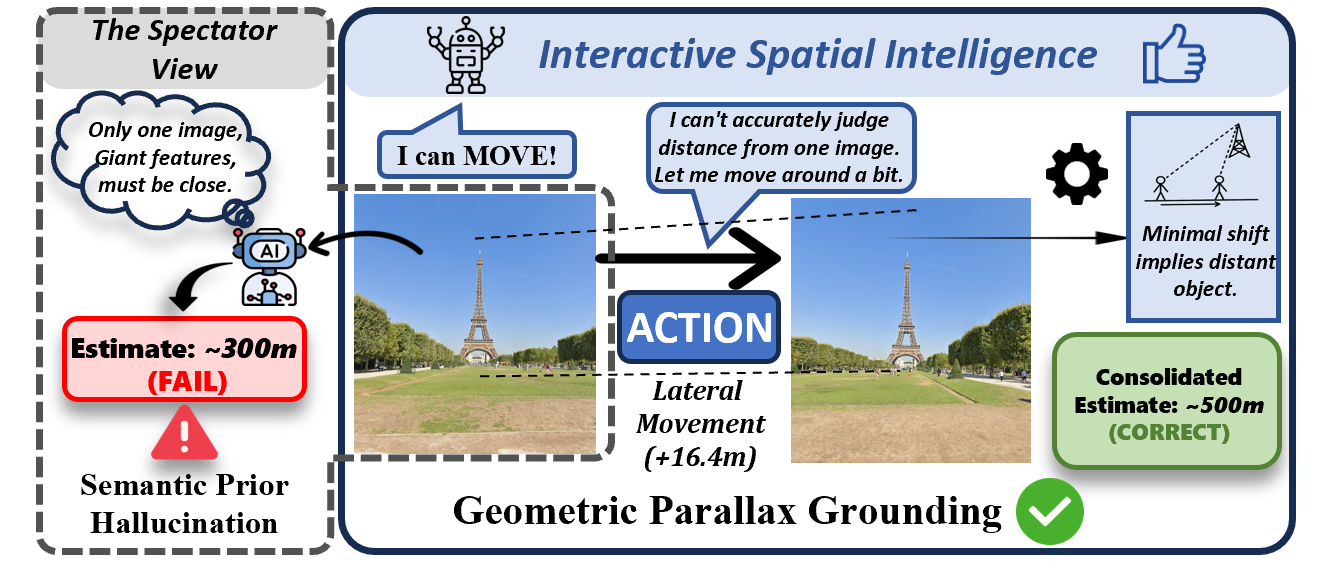
Stand Up and Move: Benchmarking Interactive Spatial Intelligence in WalkerBench
* Equal contribution
02
UNDER REVIEW
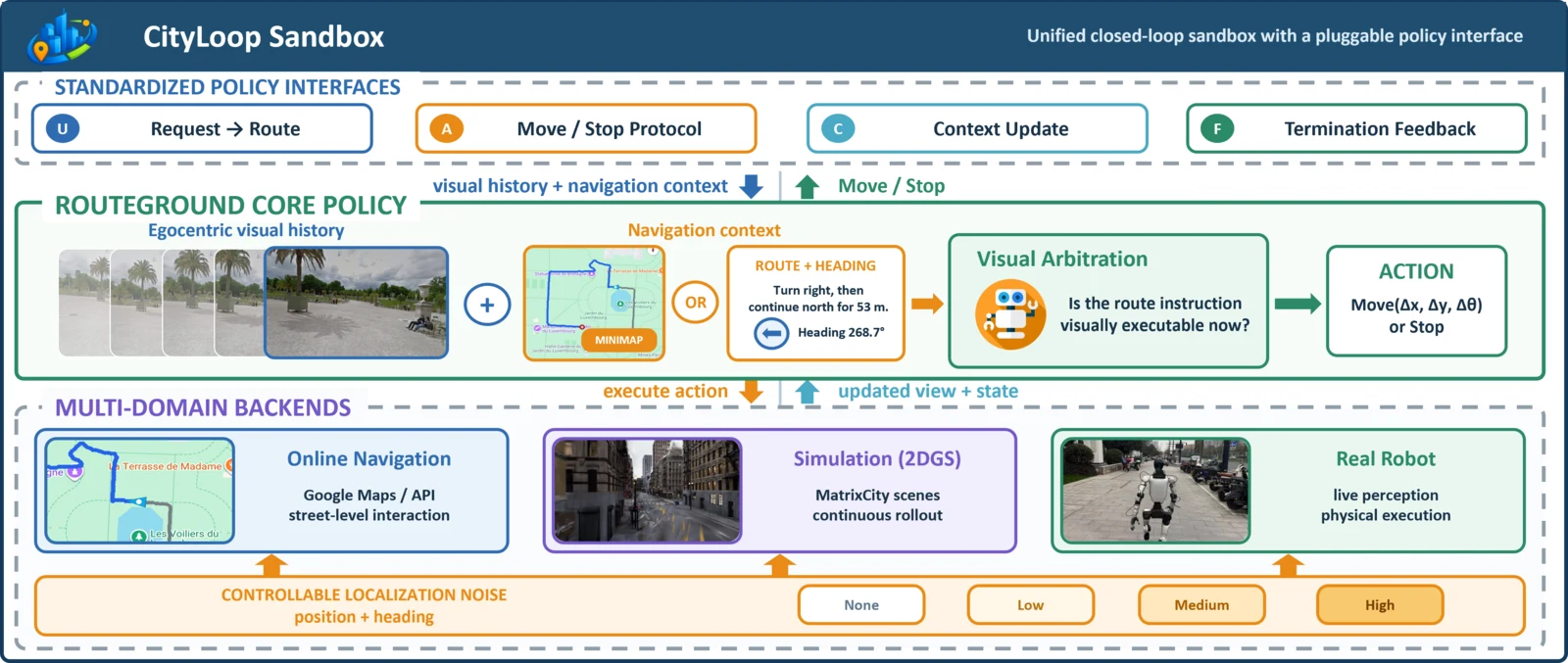
CityLoop: Sandbox for Tool-Grounded Urban Navigation
03
ARXIV PREPRINT
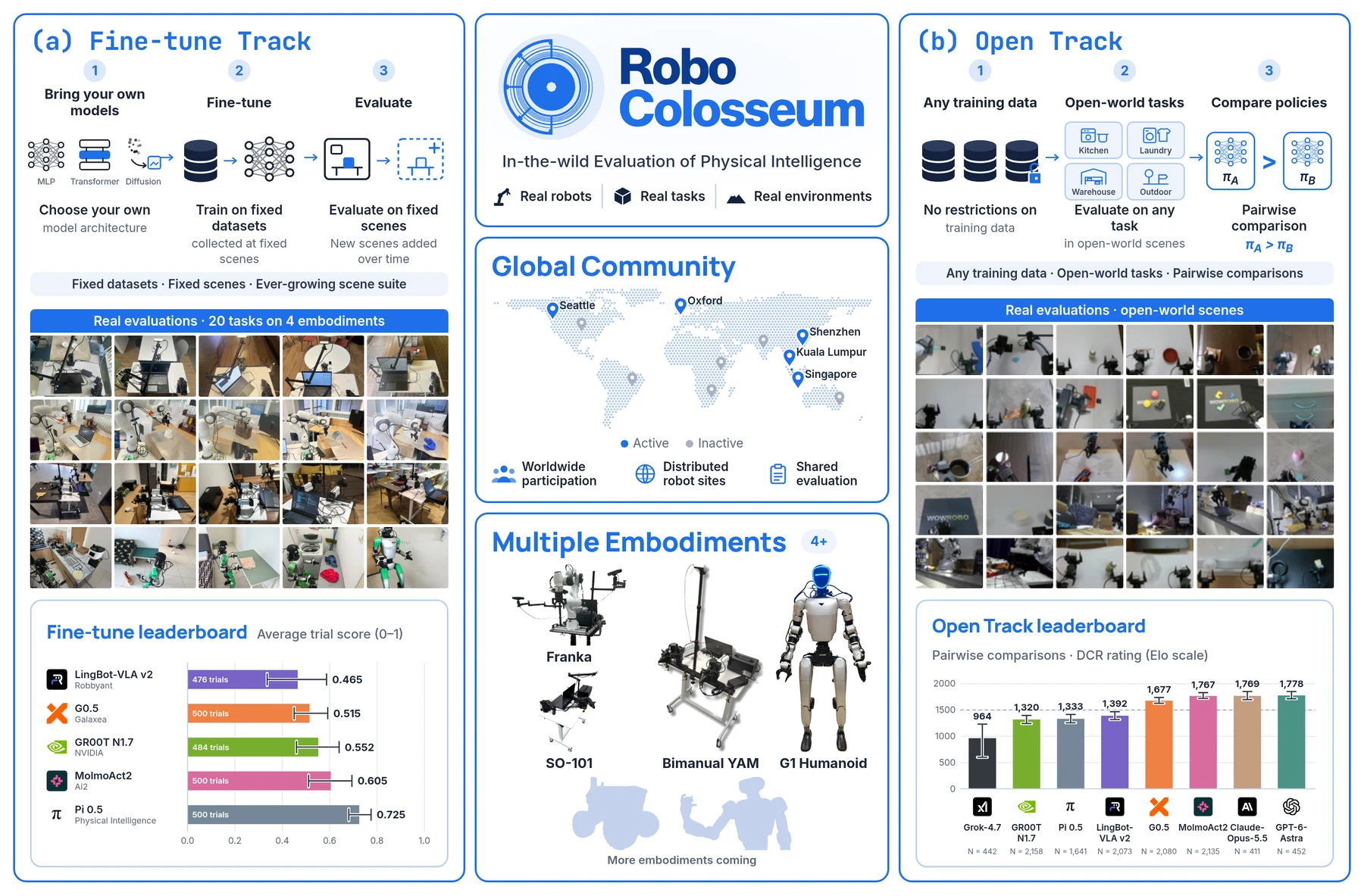
RoboColosseum: Evaluating Physical Intelligence at Scale In-The-Wild
† Co-first author, ♥︎ Core contributor, * Corresponding author
04
UNDER REVIEW
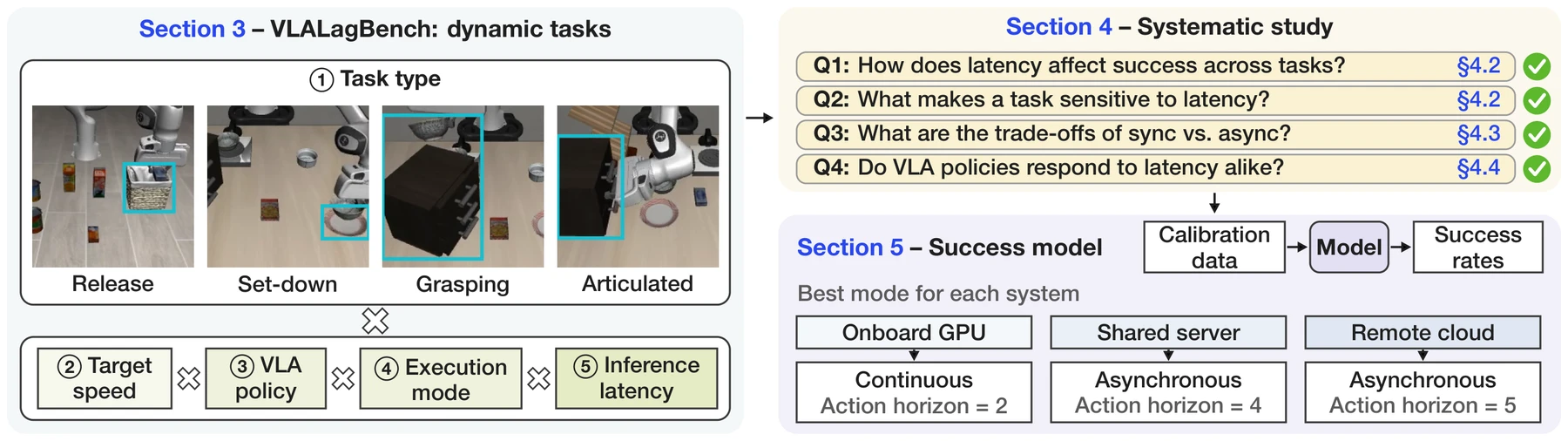
VLALagBench: Understanding When and Why VLA Inference Latency Matters
05
XRM 2026
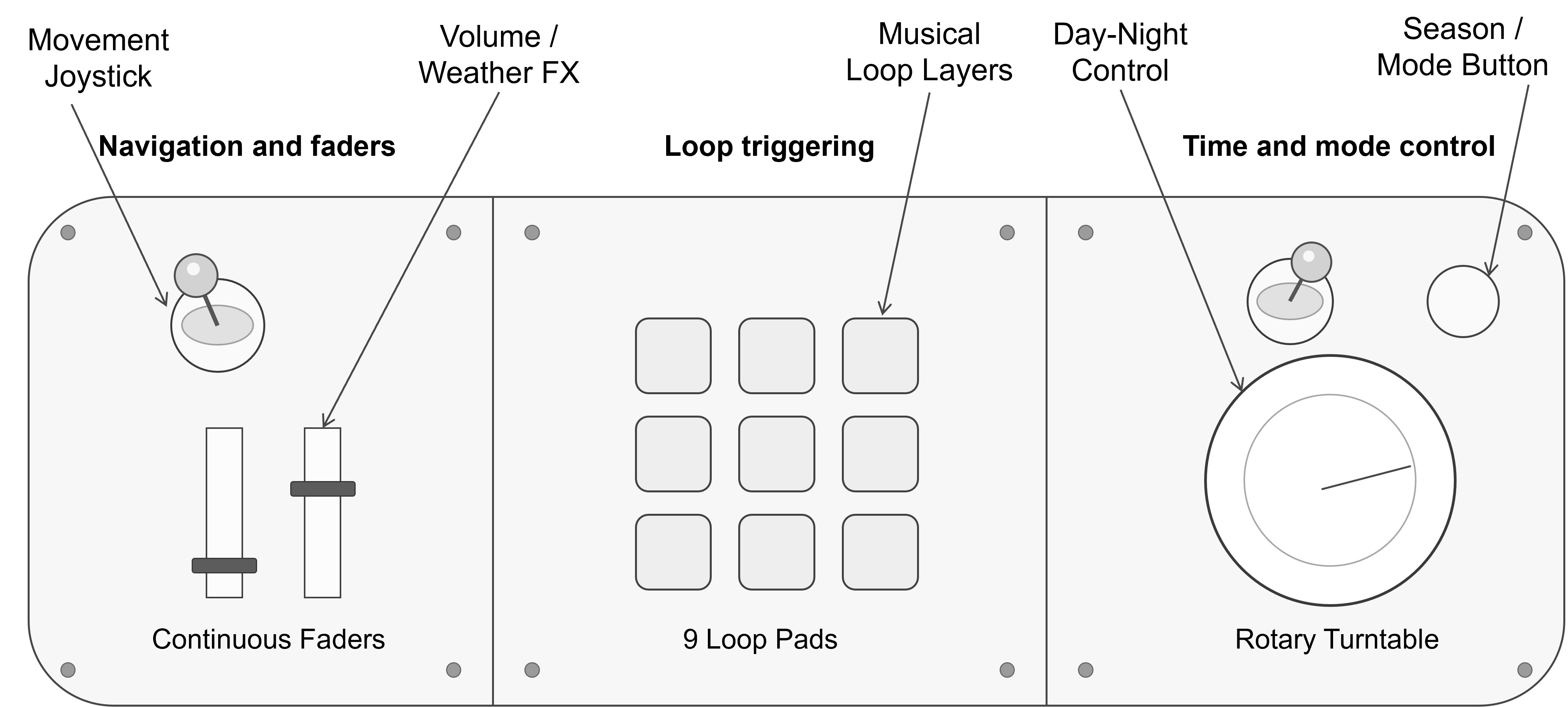
Forest Remix: A Musical Forest with Custom Embodied Tangible Hardware
* Equal contribution, listed alphabetically
PAPERDEMO ↗
03
Education
National University of Singapore
MSc in Robotics
University of Nottingham
BSc (Hons) in Computer Science · First-class
04
Research Projects
RoboColosseum
Cross-Embodiment Real-World Robot Policy Evaluation
A distributed framework for evaluating VLA policies and frontier AI agents on real robots across four embodiments. Core contributor leading the SO-101 component, advised by Prof. Jiafei Duan.
RoboColosseum
Cross-Embodiment Real-World Robot Policy Evaluation
- Led the SO-101 component across the Open and Fine-tune Tracks, fully fine-tuning five VLAs (π0.5, GR00T N1.7, MolmoAct2, G0.5, LingBot-VLA v2) on an identical 100-demo budget, with success spanning 37–82%.
- Turned frontier LLMs (GPT-6 Astra, Claude Opus 5.5, Grok 4.7) into closed-loop SO-101 policies via multimodal tool calling, adding joint-limit and step-size safety checks and an IK-based end-effector mode.
- Showed that model rankings are embodiment-specific: on SO-101, zero-shot Claude Opus 5.5 led the Open Track and GR00T N1.7 led fine-tuning, yet GR00T ranked fourth on Franka and YAM (Kendall’s W = 0.24).
CityLoop
Tool-Grounded Urban Navigation with Vision-Language Models
A request-to-arrival urban navigation sandbox connecting online navigation, 2D Gaussian Splatting simulation, and real-world robot deployment through a shared policy interface.
CityLoop
Tool-Grounded Urban Navigation with Vision-Language Models
- Built CityLoop, a request-to-arrival urban navigation sandbox that unifies online navigation, 2DGS simulation, and real-world robot deployment through a shared move/stop policy interface.
- Constructed an evaluation corpus spanning 43 cities and 22 countries/regions, with 1,000 routes, 500 POI requests, 5,000+ Street View panorama walking-route samples, and controlled position/heading perturbations.
- Developed RouteGround by fine-tuning Qwen3-VL-4B with counterfactual tool-vision conflict training and a four-stage curriculum, improving medium-noise keypoint decision accuracy from 24.9% to 59.0%, reaching 58.0% 2DGS closed-loop success and 6/20 zero-shot robot successes.
WalkerBench
Interactive Spatial Intelligence Benchmark
A global-scale benchmark spanning 161 cities across six continents, with 1,000 tasks covering active perception and spatial navigation.
WalkerBench
Interactive Spatial Intelligence Benchmark
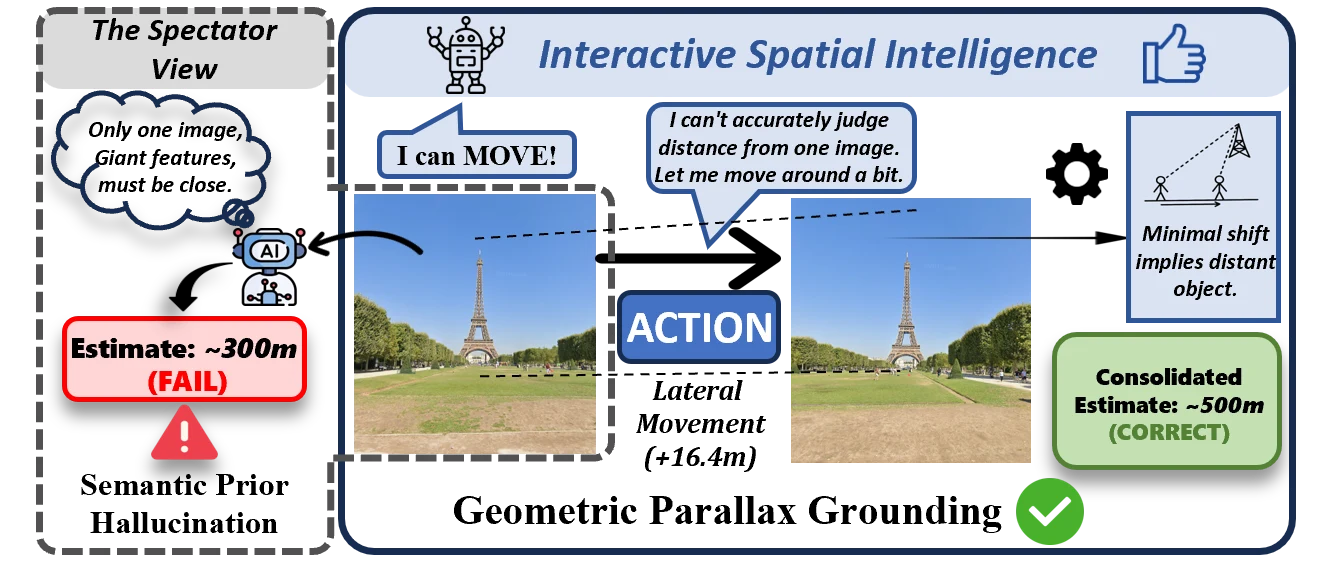
- Built WalkerBench, a global-scale interactive benchmark for embodied spatial intelligence spanning 161 cities across 6 continents, with 1,000 tasks covering Active Perception and Spatial Navigation.
- Implemented Spatial-IDE, a training-free framework that combines Explicit Topological Memory (ETM) with cognitive decoupling to address long-horizon spatial forgetting in VLM-based agents.
- Achieved average benchmark gains of +18.49 points to 36.66% (+104.97% relative) across 9 VLMs and demonstrated zero-shot transfer to real-world urban navigation on a Unitree G1 robot.
Forest Remix
Embodied XR Music System
An open-world musical forest that connects a custom 3D-printed physical controller with procedural visual and spatial audio feedback in Unreal Engine 5.
Forest Remix
Embodied XR Music System
- Directed a 6-person cross-functional team in developing a UE5-based Mixed Reality experience; owned system architecture, Git workflow, and task allocation for an open-world musical forest system.
- Developed a custom 3D-printed physical controller using Raspberry Pi Pico 2 W and MicroPython; implemented low-latency input mapping through UE5 Enhanced Input.
- Used UE5 Blueprints and MetaSound to translate physical actions into procedural feedback, dynamically driving visual environmental shifts and spatial audio modulation.
ANN-enhanced MPC
Intelligent Control for Power Converters
Neural-network-assisted model predictive control for renewable-energy power converters, validated through system simulation and hardware-in-the-loop testing.
ANN-enhanced MPC
Intelligent Control for Power Converters
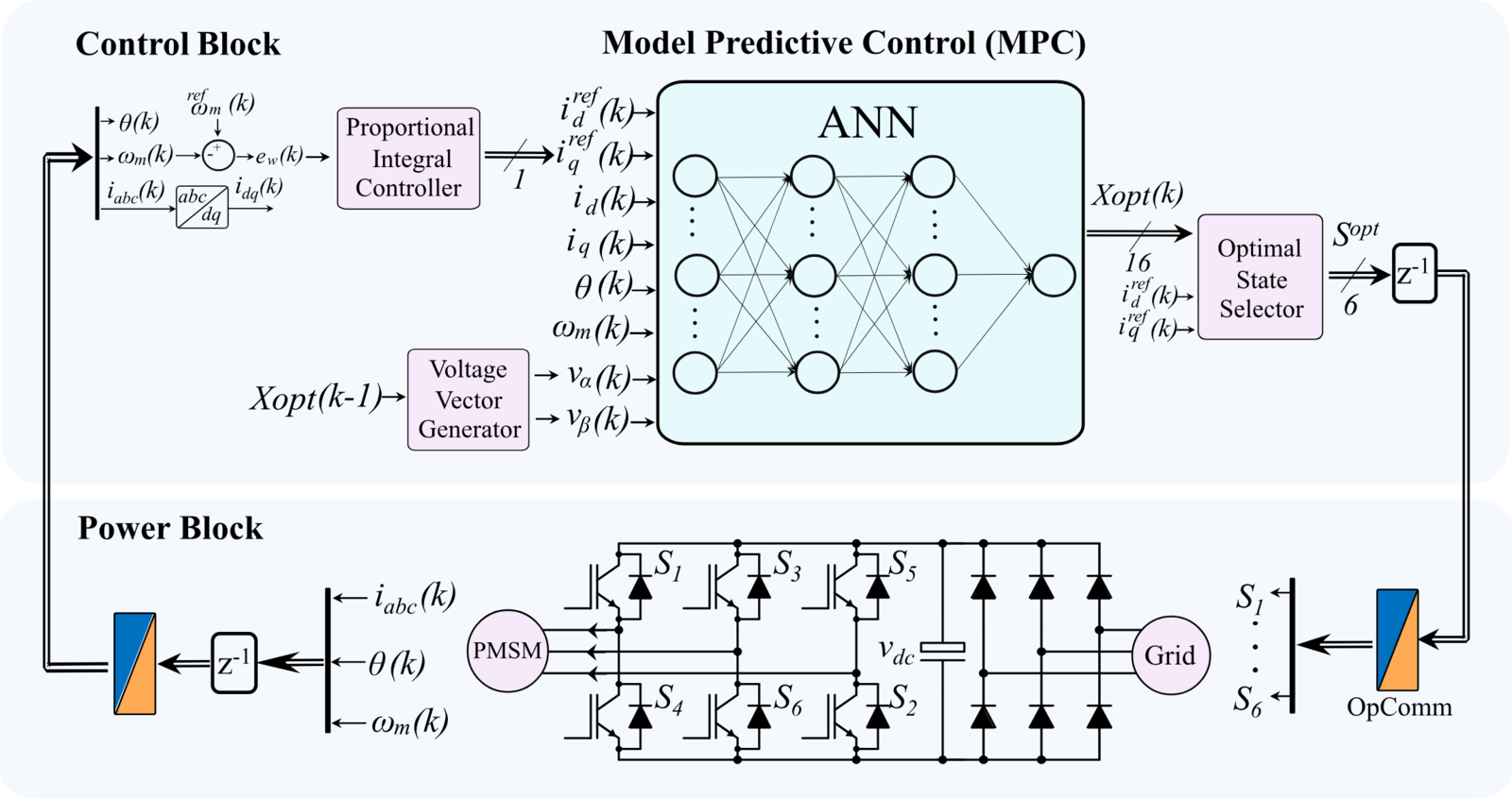
- Designed and optimized AI-enhanced Model Predictive Control algorithms for power converters in renewable energy systems, improving real-time performance and efficiency.
- Developed and trained a neural network achieving 93% prediction accuracy, enabling rapid inference and reliable real-time decision-making in embedded control environments.
- Conducted system-level modelling and simulation in Matlab/Simulink, validating results through Hardware-in-the-Loop (HiL) testing on FPGA/DSP hardware platforms.
VR Rehabilitation Game
Immersive Lower-Limb Rehabilitation Platform
A VR rehabilitation platform integrating gamified lower-limb training with treadmill hardware, adaptive navigation, and intelligent NPC interaction.
VR Rehabilitation Game
Immersive Lower-Limb Rehabilitation Platform
- Designed and implemented a VR-based rehabilitation platform using Unreal Engine, integrating gamified training with treadmill hardware for lower-limb recovery.
- Built advanced VR-human interaction systems, including a dynamic visualization dashboard and adaptive smart minimap to enhance usability and immersion.
- Developed an intelligent NPC behavior system with Behaviour Trees, enabling dynamic pathfinding and adaptive difficulty in rehabilitation exercises.
05
Professional Experience
Research Intern, Embodied AI
Unitree Robotics · Hangzhou, China
Research Intern, Embodied AI
Humanoid Robot Navigation in Open Environments
- Led the development of a closed-loop humanoid robot navigation system for natural-language-driven, long-horizon navigation in open environments, integrating maps and external tools, first-person visual perception, and vision-language model decision-making across online environments, 2D Gaussian Splatting (2DGS) simulation, and deployment on a Unitree G1 robot.
- To address spatial-state forgetting during long-horizon operation and inconsistent decisions under noisy observations, developed explicit spatial memory and active perception mechanisms together with tool–vision conflict training, improving navigation decision accuracy under medium noise from 24.9% to 59.0%.
- Built a data-generation and closed-loop evaluation pipeline that continuously produces navigation tasks, trajectories, and perturbed scenarios, enabling rapid iteration of navigation policies across online maps and 2DGS simulation while reducing the cost of real-robot validation.
- Completed long-distance zero-shot navigation in real urban environments on the Unitree G1; parts of this work contributed to WalkerBench (ECCV 2026) and CityLoop (under review).
Research Assistant
PEMC Group, University of Nottingham · Nottingham, UK
Research Assistant
Neural-Network-Enhanced Model Predictive Control
- To address the high computational cost of online prediction and switching decisions in conventional FCS-MPC, built a closed-loop simulation system for permanent-magnet synchronous motor (PMSM) drives and investigated neural networks for current prediction and switching-state decision-making.
- Designed and compared two feedforward neural network (FNN) controllers—one based on intermediate current prediction and the other on end-to-end switching decisions—and used class balancing and noise perturbation to improve robustness to minority switching states and measurement noise.
- Integrated the neural-network controllers into a MATLAB/Simulink motor-control loop and systematically evaluated tracking error, dynamic response, and computational cost. The best-performing design achieved a current RMSE of approximately 0.30 A and a settling time of approximately 0.41 s, with closed-loop performance broadly matching conventional FCS-MPC.
Data Mining Intern
Ping An Insurance · Ningbo, China
Data Mining Intern
- Engineered a multi-point user tracking pipeline for the Haochezhu app, enabling granular monitoring of user interactions within the insurance purchase flow.
- Utilized SQL-based ETL processes for large-scale data cleaning and feature extraction, eliminating anomalous records and ensuring robust downstream analytics.
- Conducted A/B experiments on UI/UX elements, leading to a 21% increase in click-through rate (CTR) and 6% growth in conversion rate for cross-sell products.